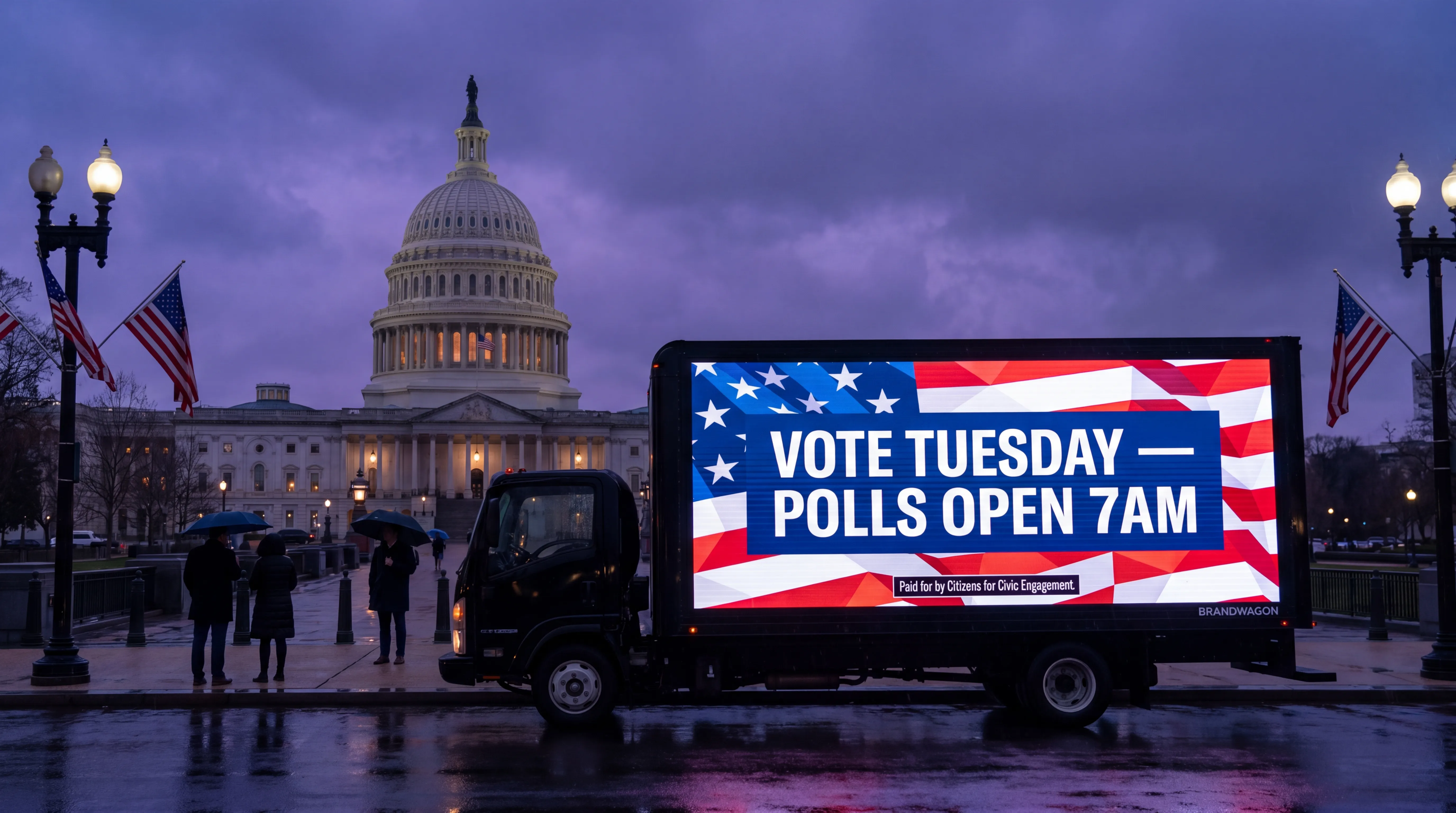
Political Campaign Advertising — Precinct-Level Targeting
Federal, state, and local races. Targeted routes through key precincts, polling places, and high-density commute corridors during election season. FEC-compliant disclaimers built in.
What it is
Political campaigns have a targeting problem. TV reaches everyone. Digital programmatic reaches the wrong people. Direct mail is expensive and gets thrown away. Mobile billboards solve a specific gap: precinct-level visibility in the corridors where target voters actually drive — and that's a capability TV and digital can't match.
Brandwagon runs political campaigns across our four metros: federal Senate and House races in PA, NY, NJ, and the DMV; state-level races (Governor, Attorney General); local races (mayoral, city council, judicial); and ballot-initiative campaigns. We map routes to specific congressional districts, target precincts that polling has identified as competitive, and run creative through the high-density commute hours when the most voters are reachable.
DMV is our heaviest political market. The 2026 midterms will run heavy across the metro — every congressional district in DC's spillover region, plus Maryland's statewide races and Virginia's federal seats. We've already had political campaigns book domination capacity for the closing weeks of October and the get-out-the-vote weekend before Election Day. PA and NY both have competitive federal and state races on the same calendar.
All political creative requires the FCC and FEC disclaimer. We integrate the disclaimer into every loop automatically, formatted to comply with the latest disclosure rules. We require the campaign or PAC's official authorizing language and authorized-by line in the creative brief. Our compliance team reviews every political loop before deployment.
What you get
- Precinct-level route targeting — districts, polling places, commute corridors
- FEC and FCC disclaimer compliance built into every campaign
- Closing-week and GOTV weekend domination capacity
- Federal, state, local, and ballot-initiative campaigns supported
- Get-out-the-vote weekend deployments — high impact in the final 72 hours
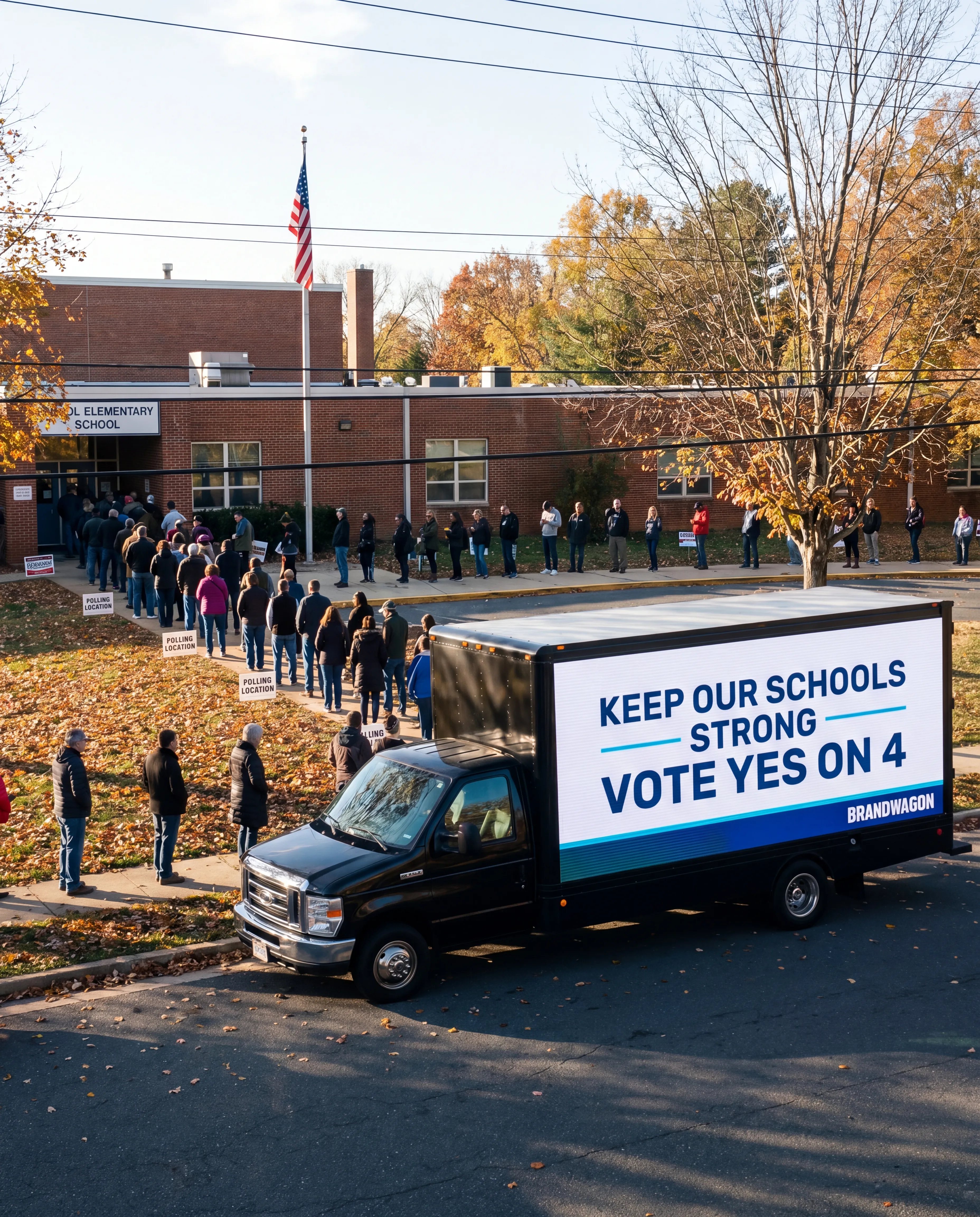
In the wild
This is what political campaign advertising looks like on the road.
Real trucks. Real screens. Real moments. Every campaign is engineered around the venue, the audience, and the window — and delivered with GPS-verified proof of play.
How it runs
From brief to road. 5 steps.
Campaign brief — race, district, target precincts, creative direction
Compliance review — disclaimer, authorization, FEC/FCC requirements
Route engineering — precinct-level mapping, polling-place corridors, commute windows
Deployment — closing-week dominations, GOTV weekend pushes, single-day routes
Reporting — GPS proof-of-play, route logs, impressions estimate
By the numbers
What this campaign delivers.
Questions buyers ask
Frequently asked.
Do you run political ads that include attack creative?
What's the lead time on a political campaign?
How granular can you target?
Can you run on Election Day?
Do you work with PACs and Super PACs?
Run a political campaign advertising.
Tell us the moment and the market. We come back with a quote within one business hour.
Get a Quote